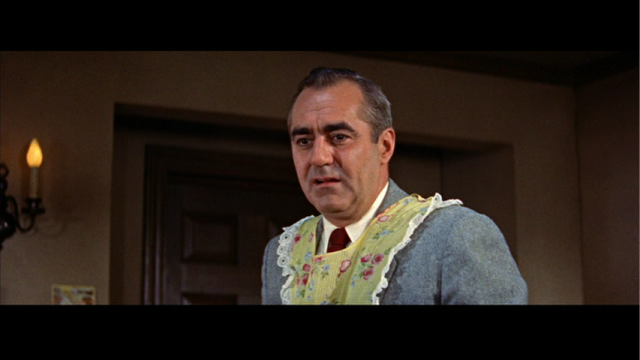
"Wow. Those are some gay undertones," states my husband, Geoff, during the first planetarium scene in Rebel Without A Cause. Geoff is not a filmmaker, has never taken a film class, and generally avoids reading too much into media. However, even he is not convinced that Plato is, as he is described by others, just "the youthful innocent."
Quickly Googling for Plato+Gay+"Rebel Without A Cause" produces a myriad of results. Seems Geoff isn't the only one picking up on Plato's vibes. Roger Ebert had this to say about Plato's reaction to the planetarium presentation in Rebel Without A Cause:
"What does he know about man alone?" It is clear now but may have been less visible in 1955 that Plato is gay and has a crush on Jim; at the planetarium, he touches his shoulder caressingly. After Buzz dies when his car hurtles over the cliff, the students all seem curiously -- well, composed. Jim gives Plato a lift home and Plato asks him, "Hey, you want to come home with me? I mean, there's nobody home at my house, and heck, I'm not tired. Are you?" But Jim glances in the direction of Judy's house, and then so does Plato, ruefully.
No one brought up the question of Plato's sexuality at "An Afternoon with Stewart Stern" where I, and several lucky others, got to listen to stories of old Hollywood and talk with the screenwriter of Rebel Without A Cause - Stewart Stern. However, Stern did elude to Nicholas Ray having an interest in men. And that Stern was "so naive" about these things when he first started working in the film industry. Indeed, one blogger even went farther with the suggestive sexuality in the film stating:
Sal Mineo—so affecting as the essentially fatherless outcast Plato—later commented that he had portrayed the first gay teenager on film. There are little clues: the photograph of Alan Ladd taped to his locker door, his longing looks at Jim Stark, his disguised declaration of love in the abandoned mansion. Ray was aware of Dean’s bisexuality and encouraged the actor to use it in certain scenes. Dean instructed Mineo, “Look at me the way I look at Natalie,” for their intimate scene in the Getty mansion. It had to be subtle. A Production Code officer had written in a memo to Jack L. Warner on March 22, “It is of course vital that there be no inference of a questionable or homosexual relationship between Plato and Jim.” In real life Mineo was gay, and it is even rumored that he and Ray (who was bisexual) also had a tryst while filming Rebel.While those of us who have seen the documentary or read the book The Celluloid Closet don't find any of this particularly shocking, the thing that still bothers me about homosexuality in mainstream film, latent or "out", is how much we like to punish the characters for their alleged transgressions. Here is a quick synopsis of mainstream Hollywood films that have come out in the last twenty years, been acclaimed by the masses and critics, featuring gay, bisexual, transgendered or otherwise "out" main characters and their celluloid fates:
- The Crying Game. Dir: Neil Jordan. 1992. This one is hard to explain, but trust me when I say that this one does not end on a complete happy note. Dead and depressed.
- Philadelphia. Dir: Jonathan Demme. 1993. Tom Hanks plays a gay attorney with AIDS who eventually succumbs to his disease. Dead.
- Boys Don't Cry. Dir: Kimberly Pierce. 1999. Hillary Swank won an Oscar for playing a transgendered man who is shot and killed by his former friends once they learn his secret. Dead.
- Far From Heaven. Dir: Todd Haynes. 2002. Dennis Qauid finally leaves his wife after revealing that he is gay only to be isolated, alone, and depressed in this contemporary re-make of Douglas Sirk's All That Heaven Allows. Depressed.
- The Hours. Dir: Stephen Daldry. 2002. This film featured several contemporary "out" characters. One was stuck in a loveless relationship. The other threw himself to his death instead of allowing AIDS to take him. Dead and depressed.
- Monster. Dir: Patty Jenkins. 2003. Charlize Theron won an Oscar for her portrayal of Aileen Wournos, a real-life lesbian/prostitute/serial killer, who is eventually tried and convicted for her crimes and sentence to death by lethal injection. Dead.
- Brokeback Mountain. Dir: Ang Lee. 2005. Jake Gyllenhaal uttered the classic line "I can't quit you" to Heath Ledger in this story of two cowboys who fall in love with each other. However, eventually Jake Gyllenhaal is viciously murdered by men who learn his secret. Dead and depressed.
- Transamerica. Dir: Duncan Tucker 2005. Felicity Huffman was robbed of the Oscar for her portrayal of a man transitioning to become a woman and the complications it brings with the discovery that she fathered a child. Alive and pretty much happy!
- Milk. Dir: Gus Van Sant. 2008. Based on the real story of Harvey Milk who, like his fictional and real peers, is assassinated. Dead.
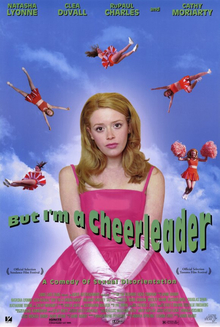
Mad love to Lane, who, one night on a slow film set, helped to create the list of modern films and the fates of their main LGBTQ characters while simultaneously doing a handstand.