Showing posts with label white men are the best at everything. Show all posts

Tuesday, November 23, 2010

White Men Are the Best at Everything: Mapping the Birthplaces of the Directors of American Film Institute’s 100 Greatest Films of All Time

My original map is on Google. You can link to it by clicking here.

In 1997 the American Film Institute issued its first list of the top 100 films of all time entitled “100 years… 100 movies.” This was to commemorate the first 100 years of the existence of motion pictures – 1896 – 1996 (Why these dates, I am unsure. Most scholars go back and forth between 1894 and 1895 for the start of the motion pictures). In 2007 this list was revised and republished. Both lists were created from the input of 1,500 “…leaders from the film community (me, not being one of them). Gone from the second list were films like The Birth of a Nation and The Jazz Singer which had characters performing in blackface and, though, technically significant to the history of cinema, were wrought with controversy surrounding their content. Added were films like Do The Right Thing and The Sixth Sense which seemingly added diversity to the list due to the fact that their directors – Spike Lee and M. Night Shaymalan – are men of color. The purpose in mapping where the directors of AFI’s 100 greatest films of all time were born along with a poster of their acclaimed film(s) is an attempt to show that while the new top 100 list attempted to expand the range of films and filmmakers incorporated into it, that the perception of excellence in motion picture production is still from a very white European-American male perspective. Thus, the list reinforces the idea that American films are the best films in the world and the only visual stories that matter to the cinema canon are feature-length fictional narratives.

This is not to say that mapping the locales of the director’s births did not provide any surprises. I was surprised that so many of the directors were European by birth. I was also surprised to find that legendary Hollywood directors Billy Wilder and Frank Capra were not born in America, but rather Italy and Poland. Capra immigrated to the United States around the age of four while Wilder came to the United States after Adolf Hitler rose to power in Germany and took over the film studio where he was working. When clicking through the map the juxtaposition of images of these very iconic American stories – like Capra’s It’s a Wonderful Life – with Europe is interesting and jarring at the same time.


Also surprising was that John Ford, who is so well known for his Westerns, was originally from Maine. Spike Lee, who is known so much for his urban stories set in New York City, was actually born in Atlanta. What this showed me is that you do not need to be from a certain place or necessarily embody a positionality similar to the characters in your film to tell stories that resonate with audiences and critics alike.

However, with that revelation came the issues of all the things that are missing from the list and from the map. First, there are no female directors on the list. There are no documentaries or experimental films. None of the films are non-feature length. None of the films are foreign produced or in a language beside English. All were made within the studio system in Hollywood. This seemed quite odd to me until I looked at the voting criteria on Wikipedia:
  • Feature length: Narrative format typically over 60 minutes long
  • American film: English language, with significant creative and/or financial production from the United States
  • Critical Recognition: Formal commendation in print, television, and digital media
  • Major Award Winner: Recognition from competitive events including awards from peer groups, critics, guilds, and major film festivals
  • Popularity Over Time: Includes success at the box office, television and cable airings, and DVD/VHS sales and rentals
  • Historical Significance: A film's mark on the history of the moving image through visionary narrative devices, technical innovation or other groundbreaking achievements
  • Cultural Impact: A film's mark on American society in matters of style and substance
The reason why I used Wikipedia as a source was that this information was not available on the American Film Institute’s website. Buried in the text on the AFI website is the fact that they were only considering the top 100 American films, but the tagline on the webpage simply says “AFI reveals the 100 greatest movies of all time” which continues the deception that this list might encompass more than just American fare. Also not mentioned is the fact that the leaders of the film community were only given a list of 400 nominated films to choose from. Who chose those films and if they used the same criteria listed above in their selection process is unknown.

This exploration and visualization really helped me to think about the naturalization process that is such a big part of the cinema history canon. The fact that AFI failed to prominently mention that they were only considering American feature narratives for their top 100 list is telling of the different ways in which other modes of cinematic production are othered in critical discourse. For instance, at the Oscars there are categories for Best Documentary and Best Foreign Language Film, but the grand prize – Best Picture – lacks any qualifiers. A more appropriate name for the award might be Best English-Language Fictional Feature. Additionally, the inclusion of the work of several European born directors – Charlie Chaplin, Alfred Hitchcock, Elia Kazan, etc. – shows whose creative input we value in the American studio system. In fact, only four directors on the list – M. Night Shyamalan (India), Peter Jackson (New Zealand), James Cameron (Canada), and Norman Jewison (Canada) – were born outside of the United States or Europe.

Primarily, I think the map brings up fascinating points about immigration; who we allow into our country to pursue the "American Dream." Aside from Capra and Wilder there were several other directors on the list that immigrated to the United States. While the rhetoric surrounding immigration is very anti-Latin America at the moment, because they will "steal our jobs," it is telling that we've allowed multiple white European film directors to immigrate and to hold one the most exclusive jobs in the country and then revered their work as the crowning achievement of what can be achieved in their profession. It says a lot about what we value in American society.

Wednesday, November 10, 2010

Battle: Outsourced the Movie versus Outsourced the TV Show

I love Thursday nights. Sadly, it is because almost every show that I regularly follow is on on Thursday nights - Bones, 30 Rock, The Office, Community, and Project Runway. I watch enough TV on Thursday nights to almost last me a week (Aside from How I Met Your Mother on Mondays. I love that too). So I was interested to see a new television show this season in my NBC Thursday night line-up that, on the surface, seemed very out of the ordinary for American television - Outsourced.

In Outsourced Todd, a mid-level manager for an American novelty outfitter, finds out that his job has been outsourced to India and he must go and train the new workers and his future replacement if he ever wants to move up high enough in the company that he can return to America and the safety of corporate headquarters. The premise for the show wasn't new to me. I had seen Outsourced the movie several years prior. However, the more I watch Outsourced the television show, the more I can see the subtle differences between its depiction of the friction between Indian culture and American culture and the culture clash in the movie version.

Anita, from Feminist Frequency, once told me that she liked the television show Farscape because the main character, John Crichton, an American astronaut, magically tumbles through the galaxy into an unknown world and instead of going by the tried and true formula of white-men-are-the-best-at-everything and letting John show the aliens how to run their section of the universe, John Crichton quickly realizes that he knows nothing. Everyday is a learning experience and every episode let the different characters rotate who would "know best" - not just letting Daddy John take the credit all the time for continuously saving the day.

The same idea is true of Outsourced the movie. Movie Todd finds himself in the middle of nowhere India (specifically, Gharapuri) trying to navigate local customs. He unknowingly offends most of the Indians he meets - including a particularly memorable sequence where he discovers why Indians think it is dirty to eat with you left hand. However, like many journeys, Movie Todd comes to learn more about himself as he learns more about the customs and traditions of India. Over the course of the movie he finds himself more estranged from the person he was and, vicariously, America; since the person that he was also sold gaudy American trinkets.

Instead of the sticks, TV Todd is stuck in the middle of Mumbai, a bustling metropolis. He too is middle management for an American novelties corporation. However, unlike Movie Todd who learns about himself through experiencing India, TV Todd is constantly correcting and instructing the people that work for him about American culture. Changing the journey that Movie Todd went through into more of a story of how white-men-are-the-best-at-everything and American culture is the best culture.

The shift from focusing on Indian culture in the movie to American culture and customs in the television show sounds small, but is actually quite profound. For instance, in Outsourced the movie Todd accidentally walks into the middle of the annual Holi celebration without knowing what it is.

At the end of this scene Purohit, Movie Todd's replacement manager, discusses how much he loved Holi as a child. While Movie Todd reminisces about how much he loved Halloween as a child. However, the emphasis in this scene is on the celebration of Holi, not an insistence that Movie Todd expose Purohit and his other workers to American customs like Halloween.

TV Todd has no problem prioritizing American customs over Indian ones. In the "Balloween" episode TV Todd throws a traditional American Halloween party. In it all the Indian characters are ridiculed in one way or another - Manmeet, the wannabe ladies man, dresses as a chick magnet, but is too afraid to talk to the hot Australian girl who finds his costume appealing. Gupta dresses as a "respectable US businessman" not realizing that he's dressed as a pimp. Asha comes dressed as Cleopatra only to be scolded for revealing too much skin when she's in the process of arraigning her marriage. Holi is never mentioned. And all the characters on the show embrace Halloween as if it was the latest and greatest thing. They even choose to dress up as American icons like Michael Jackson and Native Americans.

Not to say that Outsourced the television show is completely without its moments of hope. For instance, at the Halloween party Rajiv, the TV manager-in-training, dresses up as TV Todd and momentarily gets to mock him and, vicariously, Americans: "Is this safe to eat? Where's football? Where can I get that toilet paper with the lotion in it?" Thus, for a split second, we, the audience, are able to see what Indians find strange about our culture.

In the episode "Truly, Madly, Pradeeply" several of the characters, including fellow American, Charlie, become momentarily addicted to paan - an Indian version of chewing tobacco. This exchange also seemed less about the domination of American culture over Indian culture. I was happy to see a little but of screen time devoted to a non-American custom even if the storyline involved one of the other white American characters on the show. But these moments are fleeting. The paan aspect of the episode was a subplot and the Rajiv mockery of TV Todd was even shorter.

This is not to say that Outsourced the movie isn't without its problems as well. In both the film and the television show there is an attraction between Todd and the character of Asha. In both cases Asha is in the process of an arraigned marriage. Both versions of Todd still fall for Asha and pursue her to different degrees. It is as if because Asha's marriage is going to be arraigned by her parents that it does not carry the same weight as a "love match" marriage (the term used in the movie for a non-arraigned marriage). Therefore making her still single in the eyes of her lovelorn American boss Todd.

It will be interesting to see in the coming months if Outsourced the television show is able to gain speed and expand its moments of cultural sensitivity. As a viewer, the most interesting interactions to me are the ones that are completely foreign - the paan subplot for instance - and the ones that are the least interesting are the the cliched moments that I've seen over and over again in media. For instance, when the truly pathetic character of Tonya, a white Australian call center manager, throws herself at TV Todd in lewd and uninteresting ways. I can only hope that the television show continues to develop away from tried and true formulas and shows us something interesting. After all, it is a television show starring mostly an Indian/Indian-American cast on prime time network television. It is already revolutionary on paper. Now let's see it become revolutionary in content.

Outsourced the television show airs on NBC on Thursdays at 9:30pm.
Outsourced the movie is available to stream on Netflix.

Saturday, April 24, 2010

Things I Love: Seth Aaron Henderson


I am lucky lady. My job revolves around being creative. I make movies. However, regardless of how lucky I feel to be a filmmaker, sometimes I need to do something else. Thus, I sew. I am not a good seamstress by any means; the tool that I use most is probably my seam ripper. Therefore I am easily fascinated by those who have more skill than I. Thus, I love Project Runway. In season seven this love was focused on one designer in particular - Seth Aaron Henderson.


The funny thing is that it had little to do with his work. Truthfully, I would never wear most of clothes. They just aren't me. Grunge rock star I am not.

The reason why I love Seath Aaron Henderson is that he is a straight, married man with teenage kids who still wants to be a fashion designer.

In Tough Guise Jackson Katz talks about how masculinity (and femininity to a point) are all about fitting into these really rigid boxes that do nothing but to keep us confined and from fully actualizing as human beings.

Truth be told I don't know many men who can sew even though sewing is an important life skill. I don't mean that you have to be able to churn out couture, but everyone puts premature holes in clothes from time to time and it is a great skill to be able to fix those. Thus, I applaud Seth Aaron Henderson for not only rocking the runway with his punk/military/goth look, but being a straight man who is living outside the gender conforming box.

However, there is a flip side to this sew-tastic story. We live in a culture that is male dominated, male identified, and male centered. Does having a straight man win at a reality contest in a traditionally female-centered discipline really help to break down our rigid gender constructions? Or is is just another example of how white (straight) men are the best at everything... including sewing? It is an interesting dichotomy. Is this really progress? Or is it just another male takeover? I, personally, can't decide. So I put this quagmire out to the masses. I am going to go back to ripping out seams.

Pictures from:
Also mentioned:

Monday, January 25, 2010

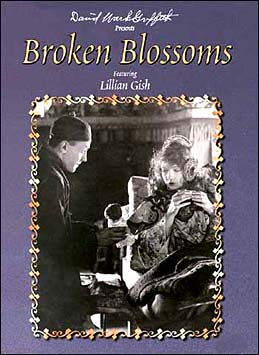
Race, Social Responsibility, and D.W. Griffith's "Broken Blossoms"

This week my colleague Kris (aka WonderYak) and I are talking about D.W. Griffith's Broken Blossoms (1918) and its interesting and, possibly, progressive portrayal of race.


R: I wasn't really sure what to expect before I sat down to watch this movie. Birth of a Nation is so racist in its portrayal of "savage" African-Americans that prowled the South after the Civil War looking for young white women to corrupt. It really bugs me. However, in Broken Blossoms, I thought that D.W. Griffith's portrayal of Chinese immigrants was much more sympathetic. Still problematic, but nothing like Birth...

K: I completely agree! In fact, so did many of my students -- almost all who wrote about Broken Blossoms (their other choice was Chaplin's Gold Rush) commented on how it felt like Griffith's penance for Birth... The fact that the villain is a white male, and that almost all white people are portrayed as conniving or cruel or boorish, nearly makes up for the stereotypes that Richard Barthelmess perpetrates as the "Yellow-Faced" Cheng Huan (overly squinted eyes, hunched back, shuffled walk, etc.).

Even Huan's one vice, opium addiction, is portrayed not as something of his own fault, but something forced upon him by Western civilization.

Then there's the fact that the entire narrative is designed to lampoon Western values in general -- "The Orient" is an entirely peaceful, beautiful place in Griffith's recreation; the West is vile and dank. The "chink" comes to spread peace, but even in his earliest attempts (with the "Jackies" at port) he is trampled, both literally and figuratively.

Is Griffith himself trying to claim that he is merely a product of his own broken society?

R: That is an interesting point. D.W. Griffith is from the South and had relatives that fought for the South in the Civil War. Does this excuse his stereotyping of newly-freed African-Americans in Birth... then? And do you think that he could have made a Broken Blossoms-esc film with the same amount of cultural empathy based around the story of an African immigrant?

K: This is all speculative, of course, but I feel Griffith could have made any film he wanted, really. His cinematic creativity was only bound by the narratives he chose to film.

We discussed the idea of "excusing" artists in class. The two main questions I posed were, "can one separate an artist from his or her work?" and "does a filmmaker have a responsibility to be socially conscientious?"

I'd personally say "yes" to the former and "no" to the latter. While I deplore the racism that Griffith perpetrated in his work, I can safely say that I admire his skill and respect his additions to cinematic language. I'd also come to his general defense and say that he had a right to express whatever views he wanted. I think I mentioned this to you, but I am thankful that, for instance, The Westboro Baptist Church exists. What they say makes me want to vomit; but if they weren't allowed to say it, how long would it be before I weren't allowed to say what I felt?

"Does a filmmaker have a responsibility to be socially conscientious?"

A discussion cropped up today w/r/t Buster Keaton's The General. One student was terribly offended by the fact that Keaton used the Civil War as a backdrop for what is essentially a slapstick comedy. "Why," he argued, "use such a terrible event in our history as a playground for antics?" I rebutted that it is because of the shared history, the almost culturally universal understanding of events like War, that they are ripe fodder for art: there is no need for a backstory. It's just there. And then, with Comedy, you get the wonderful underline of tragedy. As love stories are best told against the specter of death, great Comedy is best told in the shallow waters of tragedy.

The same goes for Tarantino's Inglorious Basterds -- yes, he makes light of WWII, but it's only because he used WWII that the film functions. Or Benigni's Life is Beautiful, another film that came up today, with equally contentious debate.

Did Keaton or Tarantino or Benigni act irresponsibly?

Filmmakers, and artists in general, only have a few responsibilities (if one can call them that): to entertain (in the classical, escapist definition of the word); to push boundaries; and/or to inform.

And by push boundaries, I don't mean be purposefully offensive...I just mean try to create something new (or, more specifically, tell us something in a new way). Make it funnier, or more exciting, or sexier, or more scintillating, or more pornographic, or more violent, or emotional, or beautiful, etc., than the last work.

And by entertain, I really just mean create a world the audience can escape to. It might be terribly unpleasant (ala Mysterious Skin) or wondrous (ala Avatar), as long as it's compelling.

So, long midnight ramble made short, Griffith does all of those three things with Birth... therefore, can he really be blamed for the work he created? Does he need to be excused?

And he also did those three things in Broken Blossoms, but with the added bonus of being significantly less offensive (though not entirely).

R: I agree and disagree. I don't believe that artists should censor themselves, but I do believe that they should be conscious of the art that they produce and its impact on society. For instance, if we take Birth of Nation, D.W. Griffith may have just wanted to show a sympathetic portrayal of what happened in the South after the Civil War because he had family that lived through that time and it was, by all accounts, a very difficult period in American history. However, his valorous portrayal of the Ku Klux Klan at that point in history inspired the actual Klan in the 1910s to use the film as a recruitment tool. They used the film to sway new members up until the 1990s by some accounts. His intentions for Birth... may have been very different from the impact that it had on the public, but its impact was widespread and devastating to African-Americans in this country. The film inspired people to commit heinous hate crimes in the name of racial purity.

The other thing that we do in Cultural Studies is look for systematic representations. It is interesting that your student brought up how the backdrop of The General is the South during the Civil War. While there were two sides fighting during the actual war we don't have a lot of filmic representations of the North, but we have a fair amount of the South, epic films at that: Cold Mountain, Gone With the Wind, Raintree County, etc. In fact, going from memory I couldn't think of any film that was from the perspective of the North, but then was reminded that Glory was about the first African-American unit in combat. So if we think about how much we want to empathize with the South in film there is something there that says a lot about our culture and what we value. If you compare this to films about World War II you do not have empathetic portrayals of the Nazi's, unless, like in Valkyre, they are trying to kill Hitler.

On the other hand, if we look at Broken Blossoms and its portrayal of a completely high "Yellow Man", it is harder for me to think of other celluloid characters that are Chinese drug addicts. Now if he magically knew some sort of martial arts then he might fit into a cliched representation that is actively working to warp the popular consciousness of the film-going public. Singularly, "bad" representations of people are not harmful. It is when they are systematic that you have this cultural absorption of grains of "truth" from their repetition. And this isn't on a conscious level. I could go on and on about this, but if interested readers might want to check out my posts on "The Cinematic Other: Dominatrix" and "'Avatar' and How White Men Are the Best at Everything".

The one thing that is systematic about his character is that he is actually a white actor in "Yellowface". This is systematic: Katherine Hepburn did it in Dragon Seed (1944) and Mickey Rooney did it (horribly) in Breakfast at Tiffany's (1961) amongst others. This also fits into the idea that White Men (and women) Are the Best at Everything, even playing cultural minorities. There is a really great article about this on Racebending.com.

Since there is no way we could ever wrap up this conversation I figured that we might put on our teacher hats and maybe list what questions we would pose to students regarding Broken Blossoms, race, and the social responsibility of artists/filmmakers:
• Do filmmakers/artists have a responsibility to make socially conscious work?
• Can you separate the intent of a film/filmmaker versus the impact of that film on society?
• Can you separate an artist's personal ideology/life from his or her work? (Think Roman Polanski.)
• Is it ever appropriate to use Yellowface/Blackface in a film?
* Is there a "caste" system in film? Meaning do darker colored minorities get treated worse than their lighter-skinned peers?

Other Resources:
Slaying the Dragon. Dir: Deborah Gee. 1988.
"Yellowface: A Story in Pictures" from Racebending.com

Monday, January 11, 2010

"Avatar" and How White Men Are the Best at Everything


The director of Avatar, James Cameron, has made a living out of making films with paper-thin narratives, cliched characters, but with lots of pretty things to look at. Avatar is no different. I must admit that I enjoyed the thrill-ride while I was on it, but looking back on the film now just makes me ever so sad.

The story goes that the Na'vi, the indigenous population (read: Native Americans) in the way of the progress of a greedy corporation (read: white Europeans), live on a remote world called Pandora (read: pre-colonial America). To try and convince them that they should move so that we can take over their land and cultivate the precious metal that lies beneath their sacred tree-home, we send Avatar Na'vi to integrate with the locals. The "dreamwalkers," as the Na'vi call them, are humans who, through the power of technology, can put themselves into the bodies of laboratory-grown half-Na'vi half-human beings. And thus, the futuristic reenactment of Manifest Destiny begins. However, this time the Avatars side with the Na'vi as the greedy corporation tries to plow down their sacred tree in order to mine the precious metal below and win in the face of interstellar corporate greed.

Now, there have been a lot of comments about how Sully, the protagonist/dreamwalker/Avatar, is highly reminiscent of the character that Tom Cruise played in The Last Samurai and Kevin Costner played in Dances with Wolves. Sully is, in effect, the white man who abandons "his" people to become the best damn minority ever. This is, because, white men are the best at everything. He gets to ride the toughest beast in the sky, he gets the village "prize" in the form of the highest ranking spiritual lady in waiting, and he hatches the plan that defeats the evil corporation that is trying to destroy Pandora's beauty. He proves that white men are really awesome at everything; including being an alien racial minority.

Truth be told, this plot device is not really new, but neither is the one that really bothered me about the film. Admittedly, being female I tend to judge films on the basis of what they let or don't let the women in the film do. The human women in the film, played by Sigourney Weaver and Michelle Rodruigez, represent two generations of actresses that have been allowed to kick butt and take names on celluloid. Sigourney Weaver totally blew them away in the Alien series (even with James Cameron at the helm!) and Michelle Rodruigez's break-through performance was in a film aptly titled Girlfight.

Spoiler alert in the paragraphs ahead. You may want to stop here if you have not seen and wish to view Avatar.

Michelle Rodruigez, once again, plays the hot-tempered Latina who is a military pilot with a soft spot for the blue Na'vi. Sigourney is relegated to the head maternal scientist role. She really wants to be a Na'vi and enjoys her forays into their world in her Avatar body. This bit of typecasting is not what bothers me (older woman as mother, Latina as "spicy"). It is the fact that for all their agency in the film that they are eventually killed off. Frequently, maybe more so than the white men as the best damn racial minority trope, female characters that embody some sort of power physically or mentally, are killed off because they are threatening to typical notions of white, male patriarchy.

Meeting their untimely doom, does not generally affect male characters who challenge authority in film. Avatar proves no different. Norm (Joel Moore), the other lovable scientist/Avatar survives the battle at the end. Not even the baddie head of corporate (Giovanni Ribisi) croaks. Nope. Once the human ladies decide to fight and challenge authority it is curtains for them and their sense of empowerment.

The only other main female character is also the only one who survives the climactic battle: the Na'vi princess, Neytiri (Zoe Saldana). And this is because Neytiri conforms to stereotypical notions of femininity. For instance, although she is a Na'vi warrior/spiritual leader, she bows down to the power and influence of the white male outsider, Sully. She is, in effect, tamed by him when she chooses him as her partner and, in a really strange scene, copulates with him in the glowing woods. She literally defends him and his authority during the climactic battle and delivers him to the glowing tree at the end so he can be permanently fused with his Na'vi body and take his place as chief of the tribe. She exhibits a lot of physical, mental, and spiritual authority, but once she meets Sully it is all in service of him and his mission. Lame.

Undoubtedly, Avatar broke new ground technologically with its combination of human actors and computer generated effects. However, I wish that more time had been taken to think about how the story perpetuates very old notions of gender and race that are deeply troubling to those of us who do not identify with the white, male majority. I want to see a movie where women get to kick butt (mentally or physically), take names, don't lament over their relationships with men and survive to tell their tale.

To see Sigourney Weaver talk about her character in Avatar click here.
To see Zoe Saldana talk about her character in Avatar click here.